

23.10.2026
A Place That Remembers: Victims of the Minsk Ghetto Honoured at the "Broken Hearth" Memorial
On 23 October, a commemorative event dedicated to the anniversary of the liquidation of the Minsk Ghetto was held in the Jewish Memorial Park on Sukhaya Street. Representatives of the Jewish Religious Community of Minsk, a rabbi, and representatives of the Maccabi BY sports institution gathered at the "Broken Hearth" memorial to honour the Jews who perished during the Nazi occupation.
On 21–23 October 1943, the Nazis carried out one of the final operations to annihilate the ghetto's inmates. Those days became a tragic milestone in the history of the Minsk Ghetto — one of the largest sites of forced isolation and extermination of the Jewish population in occupied Europe.
On 21–23 October 1943, the Nazis carried out one of the final operations to annihilate the ghetto's inmates. Those days became a tragic milestone in the history of the Minsk Ghetto — one of the largest sites of forced isolation and extermination of the Jewish population in occupied Europe.
A Place That Keeps History
The choice of venue for the event is deeply symbolic. The territory of today's Jewish Memorial Park on Sukhaya Street is inseparably linked to the history of Jewish Minsk and the tragedy of the Holocaust. The old Jewish cemetery was located here, part of which fell within the boundaries of the Minsk Ghetto during the war. About five thousand Jews murdered in 1941–1943 were buried on its territory.
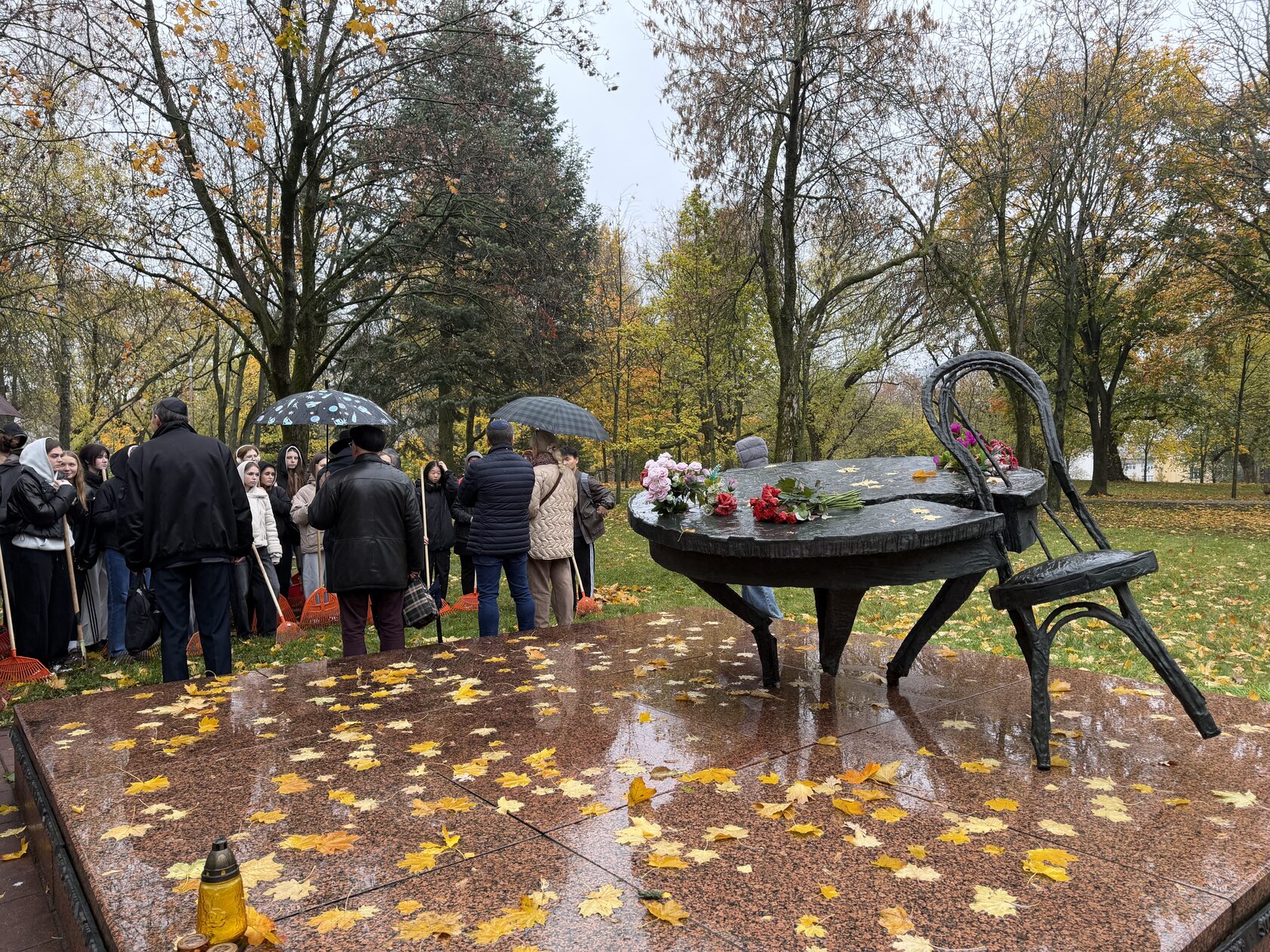
In 2008, the "Broken Hearth" memorial, dedicated to the victims, was unveiled at the site of the former cemetery. Its composition evokes the image of a destroyed home — a space in which human life took shape, family traditions were preserved, and heritage was passed down from generation to generation.
The red granite pedestal resembles the foundation of a home destroyed by war. The broken table with its collapsed legs and the chair stuck in the cracked tabletop embody the image of an extinguished family hearth — a world destroyed together with its inhabitants. Architect Leonid Levin and sculptor Maxim Petrul expressed in this composition the tragedy not only of individual human fates, but of entire families deprived of their future.
Nearby stands the Pantheon of Stones — a memorial complex dedicated to Jews from Western Europe who were deported to the Minsk Ghetto and murdered by the Nazis. The memorial stones mark the cities from which people were sent to Minsk, including Hamburg, Berlin, Vienna, Brno, and Düsseldorf. Among them is a stone in memory of the 993 Jews deported from Düsseldorf who perished in the Minsk Ghetto.
These monuments remind us that the tragedy of the Minsk Ghetto affected more than the local Jewish community. People were brought here from various European countries, torn from their native cities, homes, and loved ones. On Sukhaya Street, the fates of the Jews of Belarus and Western Europe converged — people united by the shared tragedy of the Holocaust.
A Prayer in Memory of the Victims
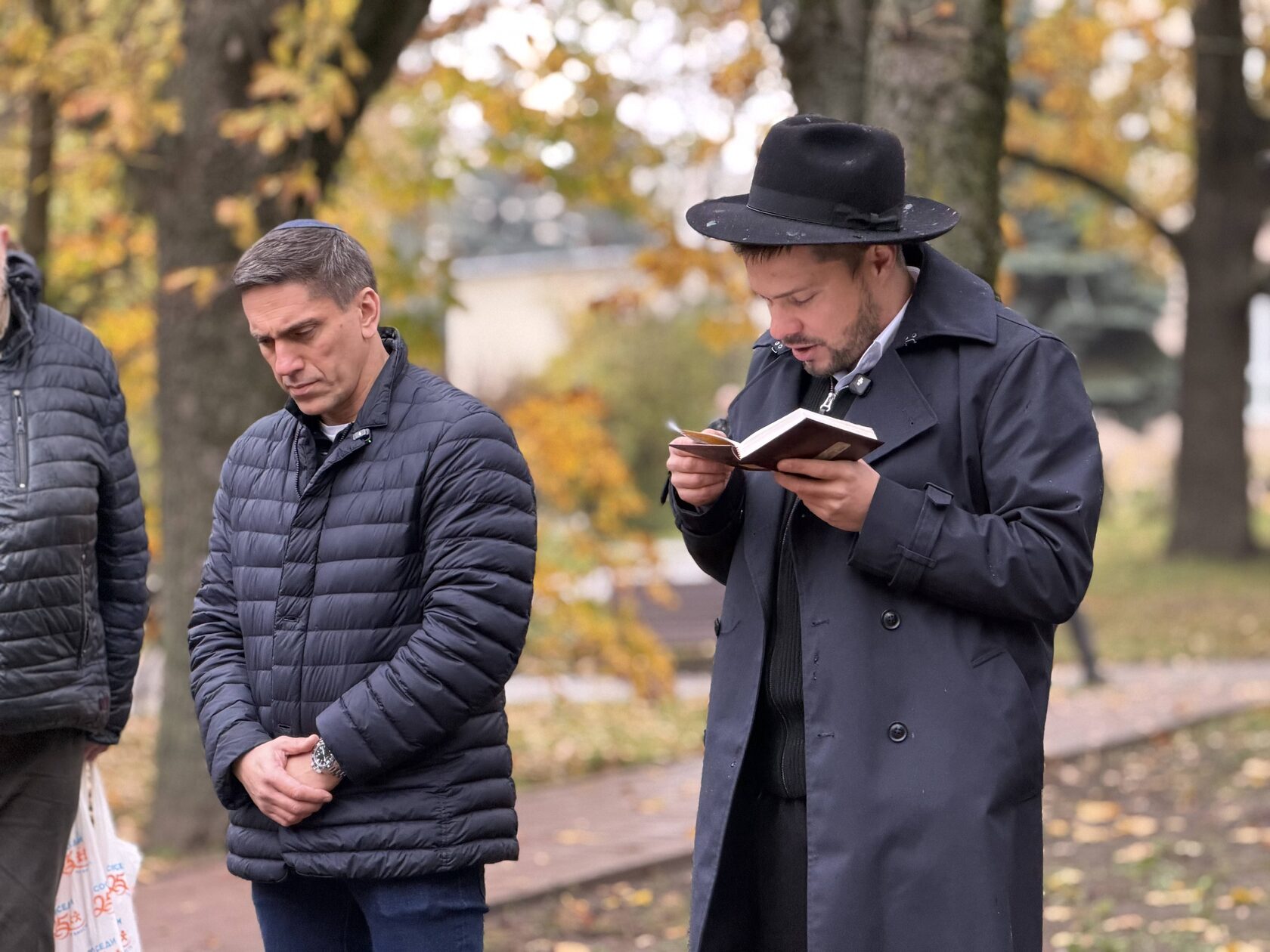
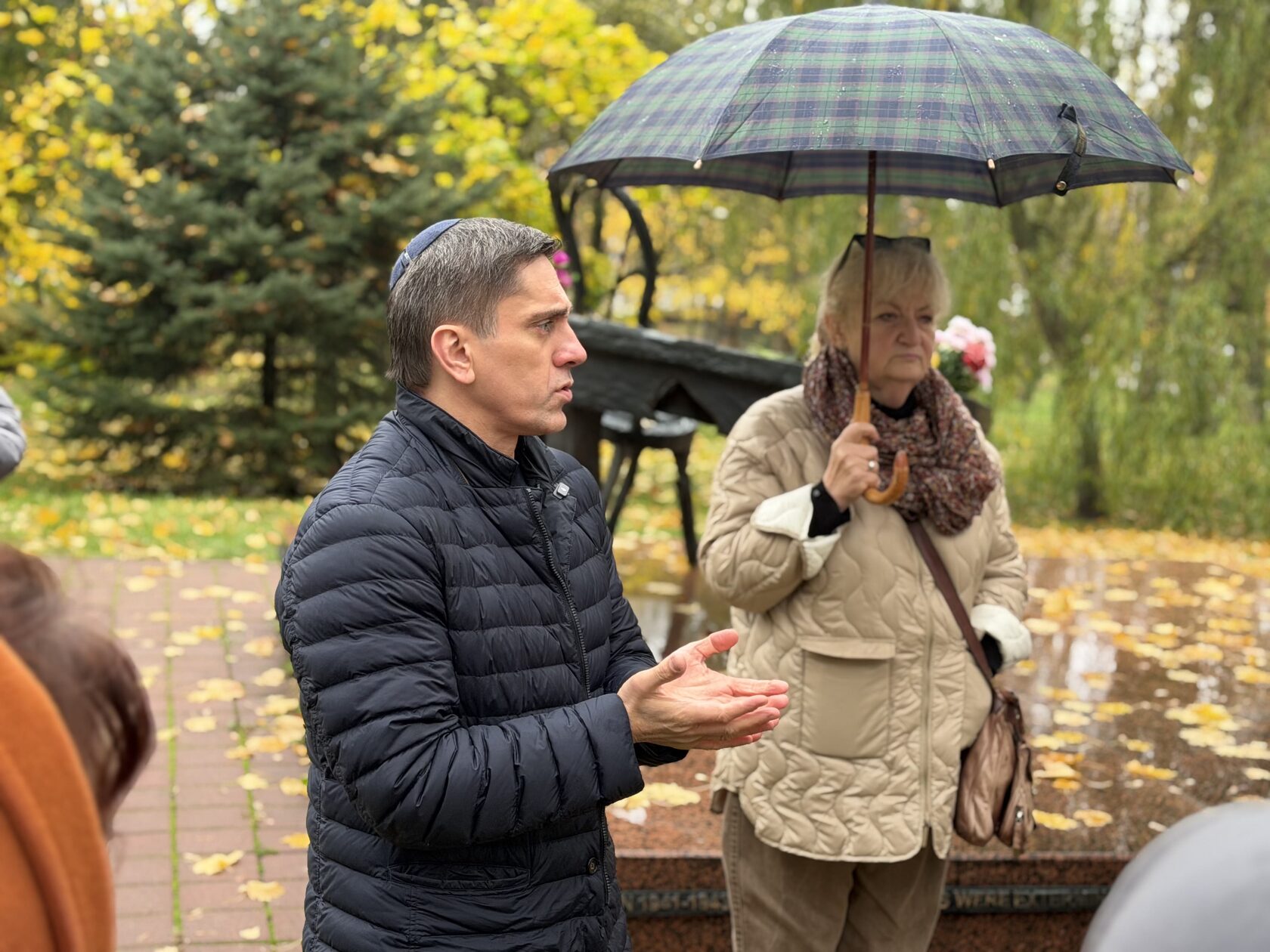
The central moment of the event was the recitation of Kel Maleh Rachamim. Members of the Minsk community and Artur Livshyts, Chairman of the Jewish Religious Union in the Republic of Belarus, read this prayer in memory of the victims of the Minsk Ghetto, after which the participants laid flowers at the memorial.
In Jewish tradition, Kel Maleh Rachamim holds a special place in the remembrance of the deceased. Its words, spoken at a site of mass burial, lent the ceremony profound spiritual meaning and became an expression of mourning for those whose lives were cut short during the Holocaust.
A Dialogue Between Generations
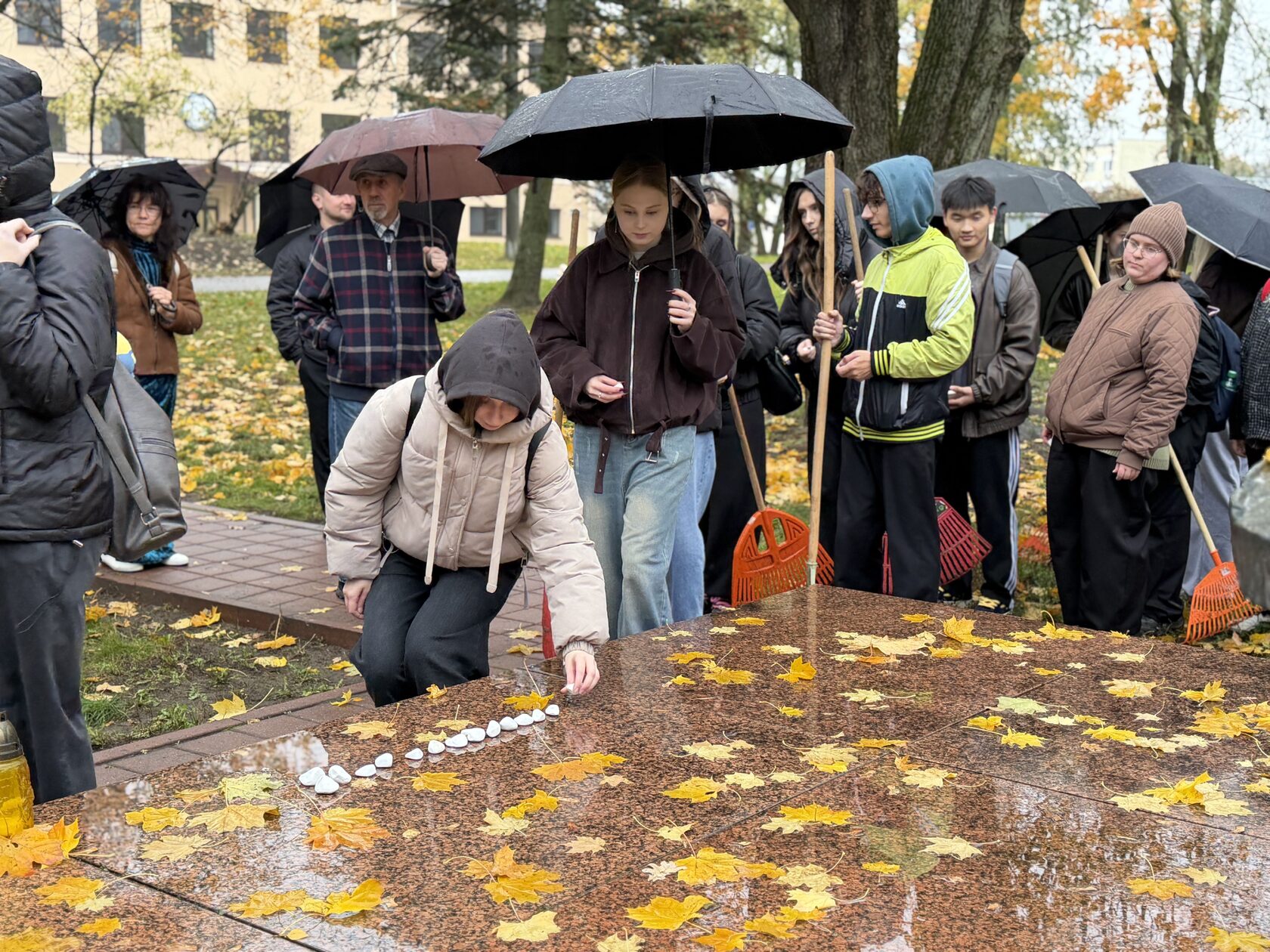
Gathered at the "Broken Hearth" memorial were representatives of the Jewish Religious Community of Minsk, a rabbi, representatives of the Maccabi BY sports institution, and students of the Belarusian State Pedagogical University. For the students, this day was an opportunity not only to join the ceremony but also to contribute to the care of the Jewish Memorial Park by tidying its grounds. Participation in such work is a simple yet important gesture of respect for the people whose lives were cut short during the Holocaust, and for the place that preserves the evidence of that tragedy.
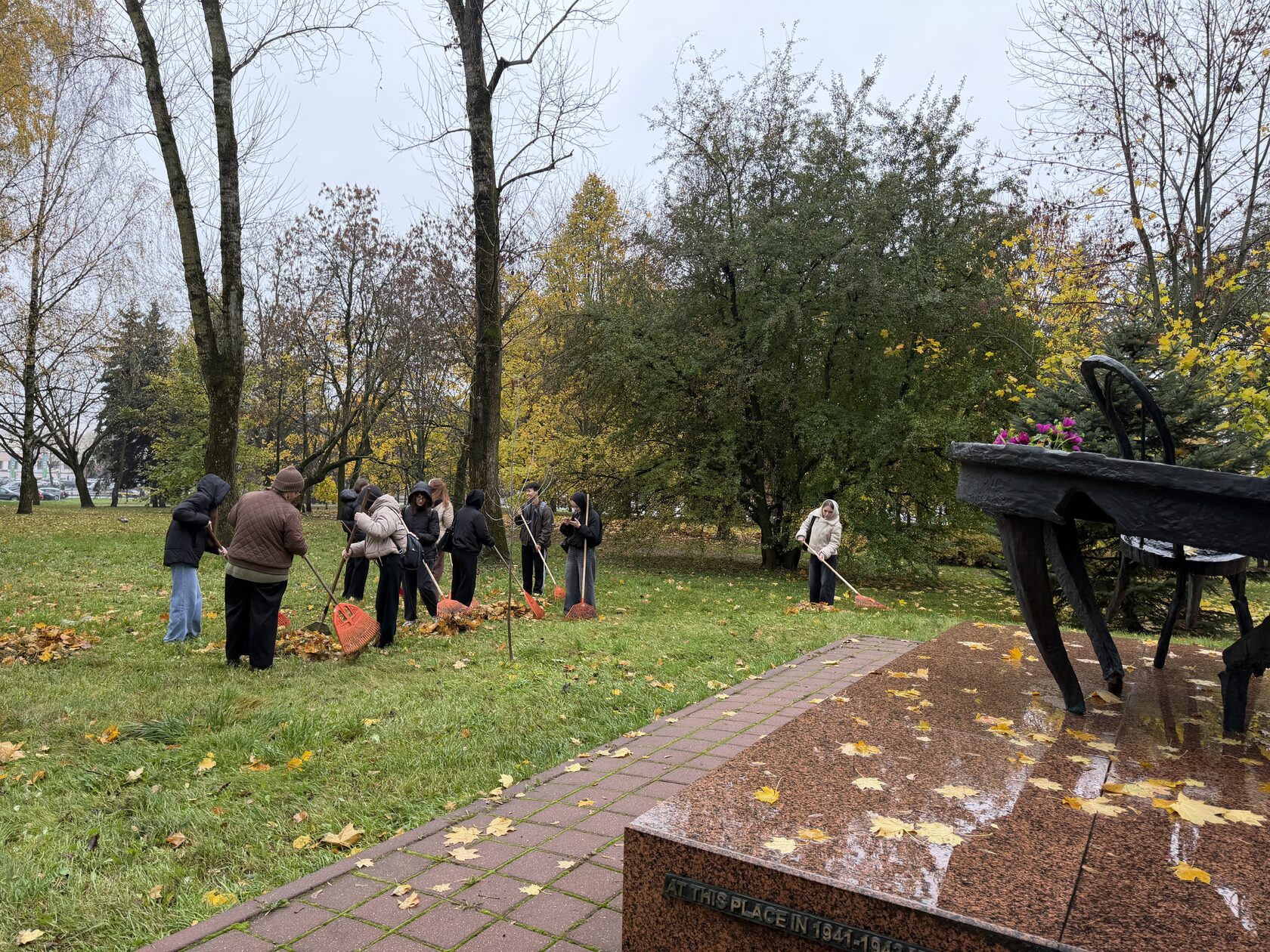
Artur Livshyts, Chairman of the Jewish Religious Union in the Republic of Belarus, thanked the students for their work and their compassion. The joint work at the memorial became a link between generations — an opportunity to connect with history not only through words, but through personal participation.
Responsibility to the Past and the Future
The Minsk Ghetto is one of the most tragic pages in the history of Belarusian Jewry. The ceremony at the "Broken Hearth" memorial became a tribute to the victims and a reminder of the importance of preserving historical truth.
By passing on knowledge of the Holocaust to the next generations, we preserve the testimony of the past and affirm the value of human life.
By passing on knowledge of the Holocaust to the next generations, we preserve the testimony of the past and affirm the value of human life.
Read more