

29.07.2026
The Keeper of Sacred Texts: The Mission of Rabbi Shaul Nekrich
In Jewish tradition, the Torah is not merely a book. It is a living document, the thread that connects generations. Every scroll, every letter within it, holds the memory of the past and carries light into the future. This is precisely why the visit to Belarus of Rabbi Shaul Nekrich, a master of restoration and examination of sacred texts, became a significant event for our Union.
The Path to a Calling
Rabbi Shaul Nekrich was born in 1979 in Leningrad, but his roots run deep into the Belarusian soil. On his mother's side, his family comes from Vitebsk; on his father's, from Slutsk and Glusk. In 1996, he repatriated to Israel, where he received his rabbinic education from the Jerusalem Rabbinate and studied at renowned yeshivas, including Mir and Lakewood.
Today, Rabbi Nekrich lives in Israel, yet for the past twenty years, his professional life has been inextricably linked with Germany. He served as the State Rabbi of Brandenburg and currently leads the Jewish community of Kassel and North Hesse. His authority in the European Jewish world is immense. On January 27, 2021, in the presence of Chancellor Angela Merkel, he wrote the final letters of one of Germany's oldest Torah scrolls — a powerful symbol of Jewish continuity on that soil.
Craftsmanship in the Service of Tradition
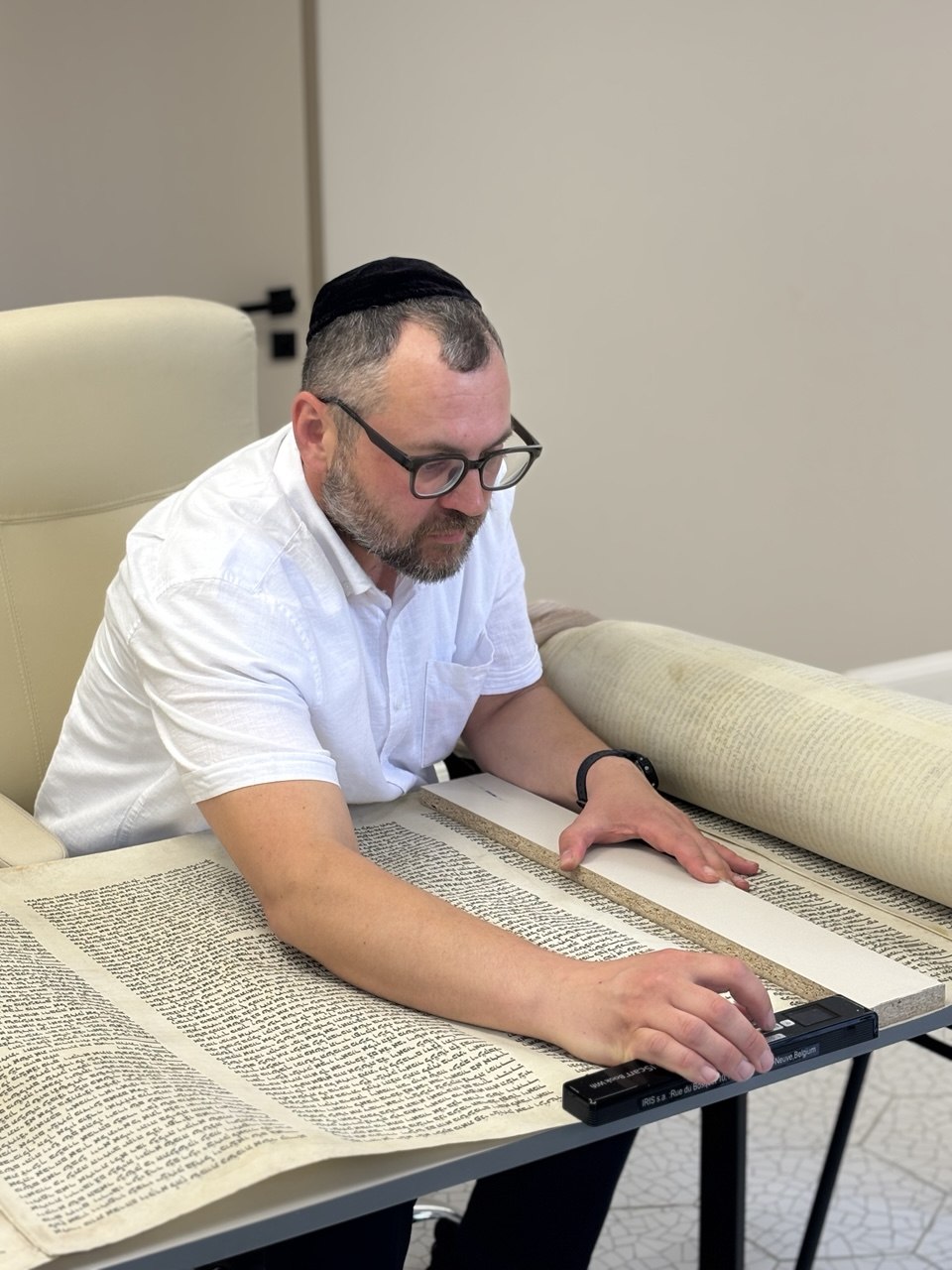
Beyond his rabbinic duties, Shaul Nekrich is a professional scribe (sofer) and restorer of scrolls. He heads the relevant department at the European Conference of Rabbis.
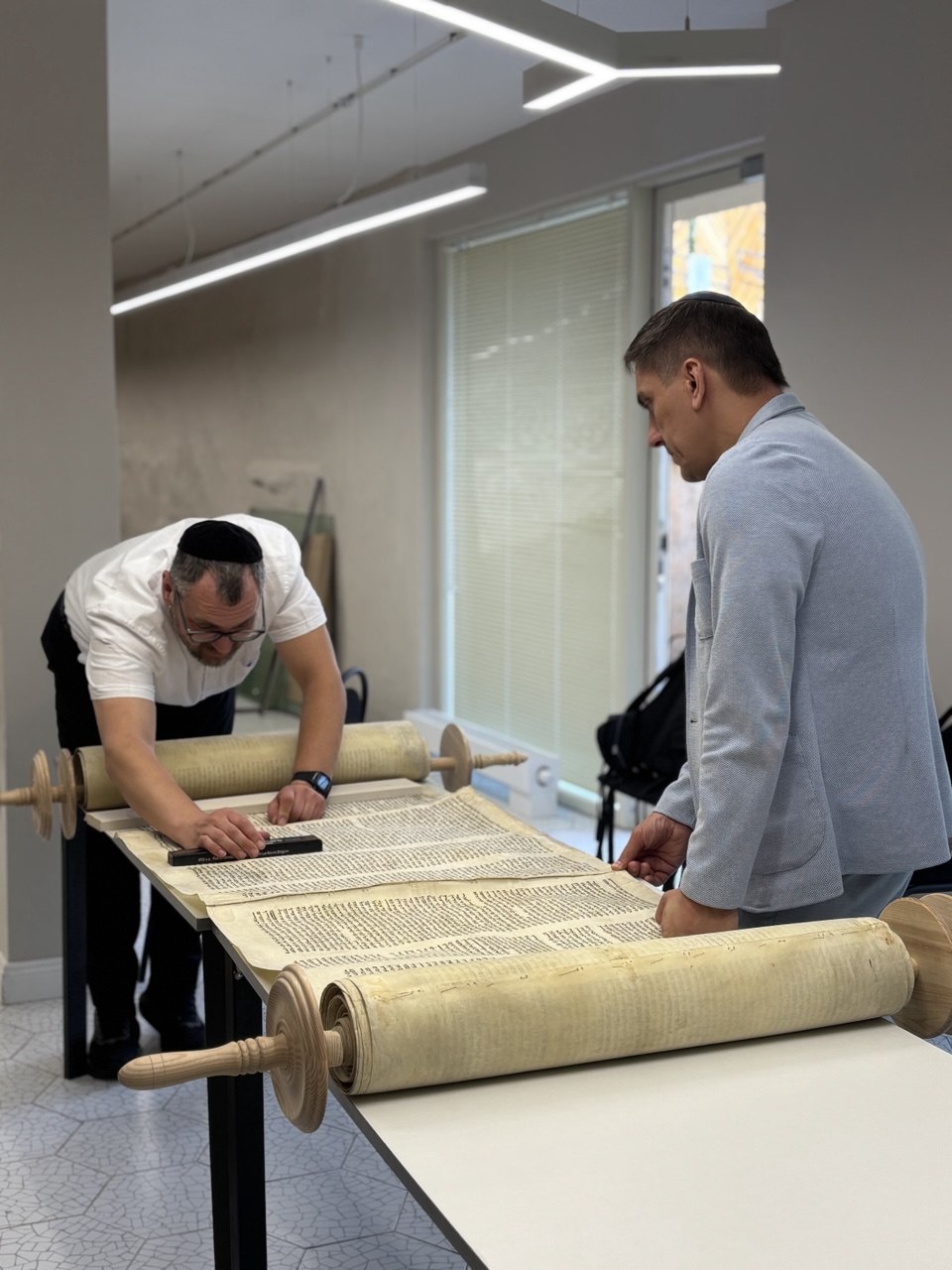
In recent years, he has dedicated himself to a unique mission: traveling to Jewish communities across Europe to personally check the condition of sacred scrolls. Using modern computer-aided verification methods, he identifies defects that could render a scroll unfit for reading, and then, like a skilled artisan, he restores them to life with his own hands.
It was this mission that brought Rabbi Nekrich to Belarus at the initiative of the Jewish Religious Union. During his intensive visit, he examined six Torah scrolls in Glusk, Slutsk, Bobruisk, Lipen, and Minsk. A special place in his journey was the visit to the Volozhin Yeshiva — the "mother of all yeshivas" — where he examined and dated the scroll kept there.
"Every scroll that comes into my hands is a living witness to our history," says Rabbi Nekrich. "My task is not merely to correct letters, but to restore the connection between generations, so that the voice of the Torah continues to sound in every community."
A Personal Connection to Belarus
The visit also carried deep personal meaning. The rabbi's wife, Dvora Nekrich, has spent over a decade researching family genealogy. Through her painstaking work, the couple discovered documented evidence of their roots in Belarus. For Shaul Nekrich, this meant finding references to relatives in Glusk and Slutsk — the very places that were once home to his family.
A Look to the Future
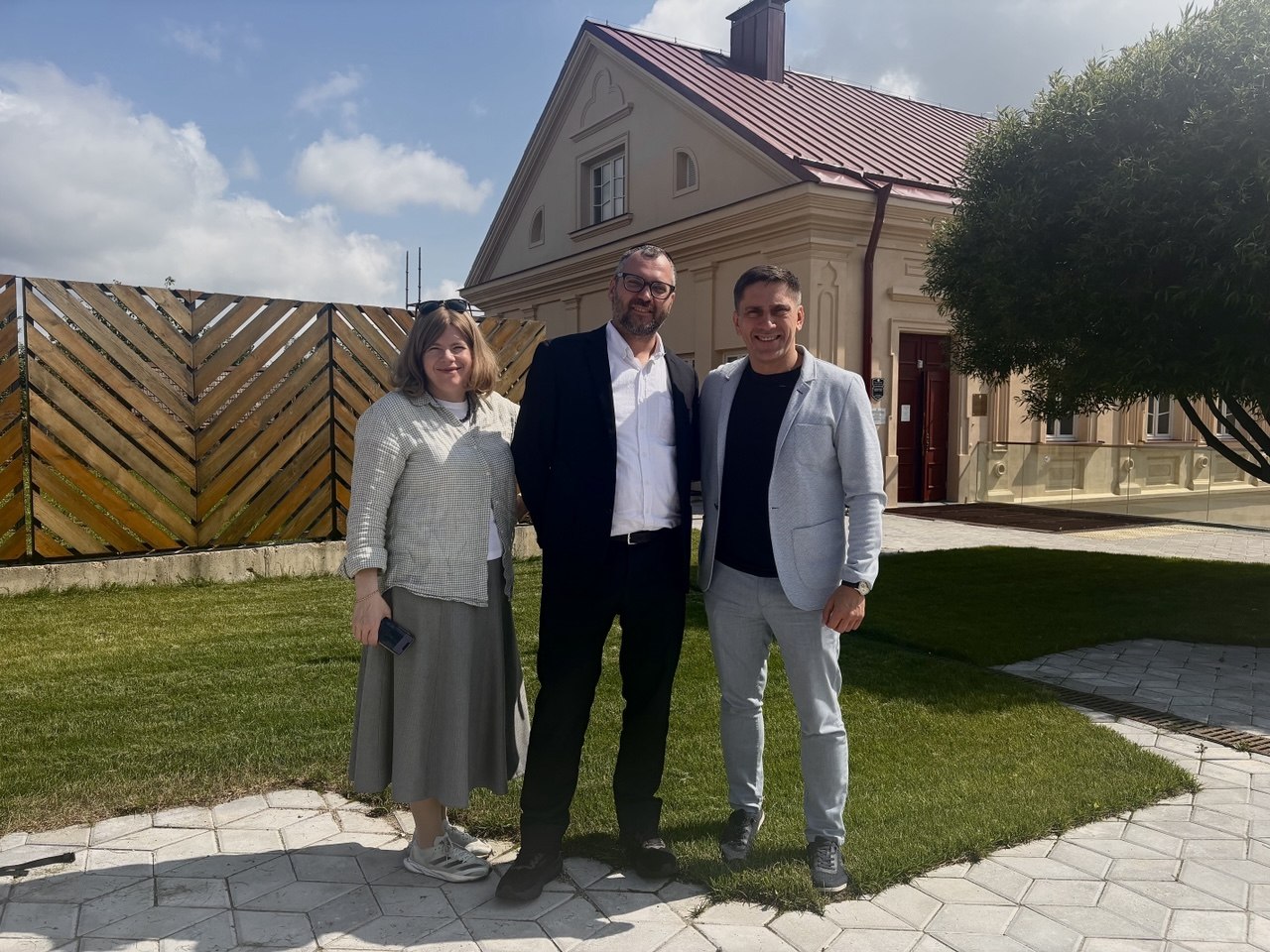
Having reconnected with his ancestral roots, Rabbi Nekrich has promised to return to Belarus. And not just once. He plans to come with his family, to explore the land of his forefathers, to visit the towns where his family lived, and to continue his sacred work of preserving Torah scrolls for future generations.
Thanks to people like Rabbi Shaul Nekrich, we are confident that the great history of the Jewish people continues to be carefully written and passed on — from teacher to student, from master to community.
Read more