


13.08.2026
Lapidarium on Sukhaya Street: How Stones Find Their Voice
Work continues in Minsk on the creation of a memorial at the site of the former Jewish cemetery. More than half of the surviving tombstones have already been cleaned and digitized.
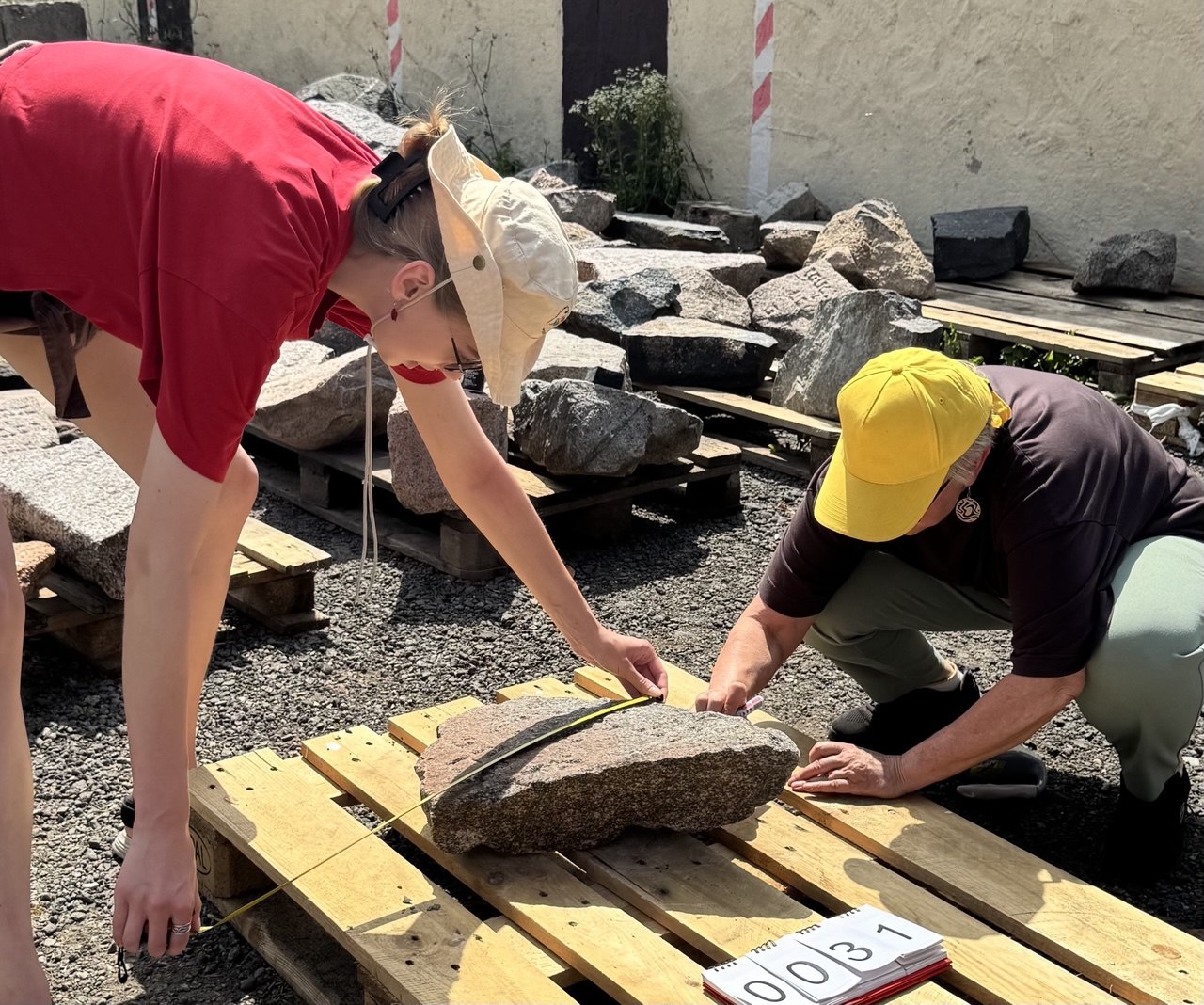
The project to preserve the historical heritage on Sukhaya Street is gaining momentum. On August 13, 2026, volunteers gathered once again to continue the work of rescuing unique historical tombstones from the former Jewish cemetery. To date, 140 matzevot have been cleaned, measured, photographed, and numbered — this is more than half of the total number of surviving stones (about 250).
The History of a Place Where Memory Meets Oblivion
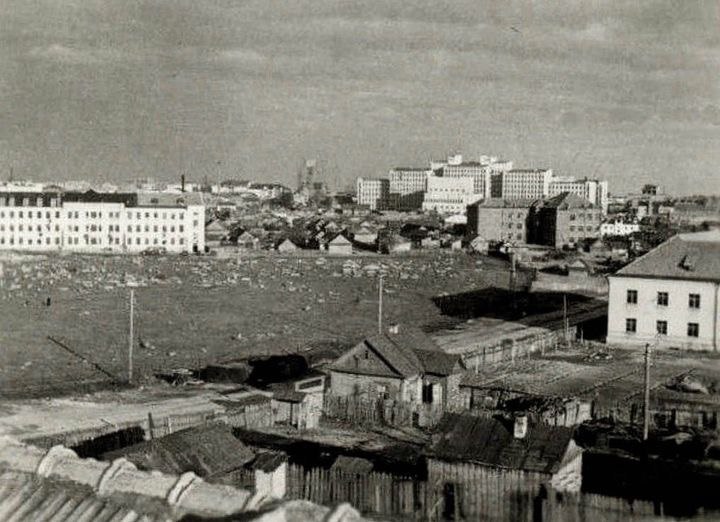
The Jewish cemetery on Sukhaya, established in 1868, was the main burial ground for Minsk's Jewish community for over a century. Thousands of people rest here: from rabbis and scholars to ordinary families whose lives were intertwined with the city's history. During the war, it found itself within the ghetto territory, becoming a witness to the tragedies of the Holocaust. In the 1970s, the cemetery was closed, and in the 1990s, it was almost completely razed to the ground, leaving only a few monuments to the victims. About 250 tombstones lay in the park for decades, deteriorating from time and weather.
How Did the Project Begin?
The idea of creating a lapidary originated with the Jewish Religious Union in the Republic of Belarus. In April 2026, a working meeting was held with the head of the Moskovsky District administration, where the concept of the future memorial was discussed.
On June 23, 2026, having received official permission from the authorities, the Union began the careful transfer of tombstones from the memorial park to the Main Synagogue on Daumana Street. As explained by Arthur Livshits, Chairman of the Jewish Religious Union:
"Our initiative was supported by the city authorities. We transported approximately 250 matzevot and their fragments. All of them will become part of a single architectural space, and instead of stones scattered on the ground, a place of memory will appear."
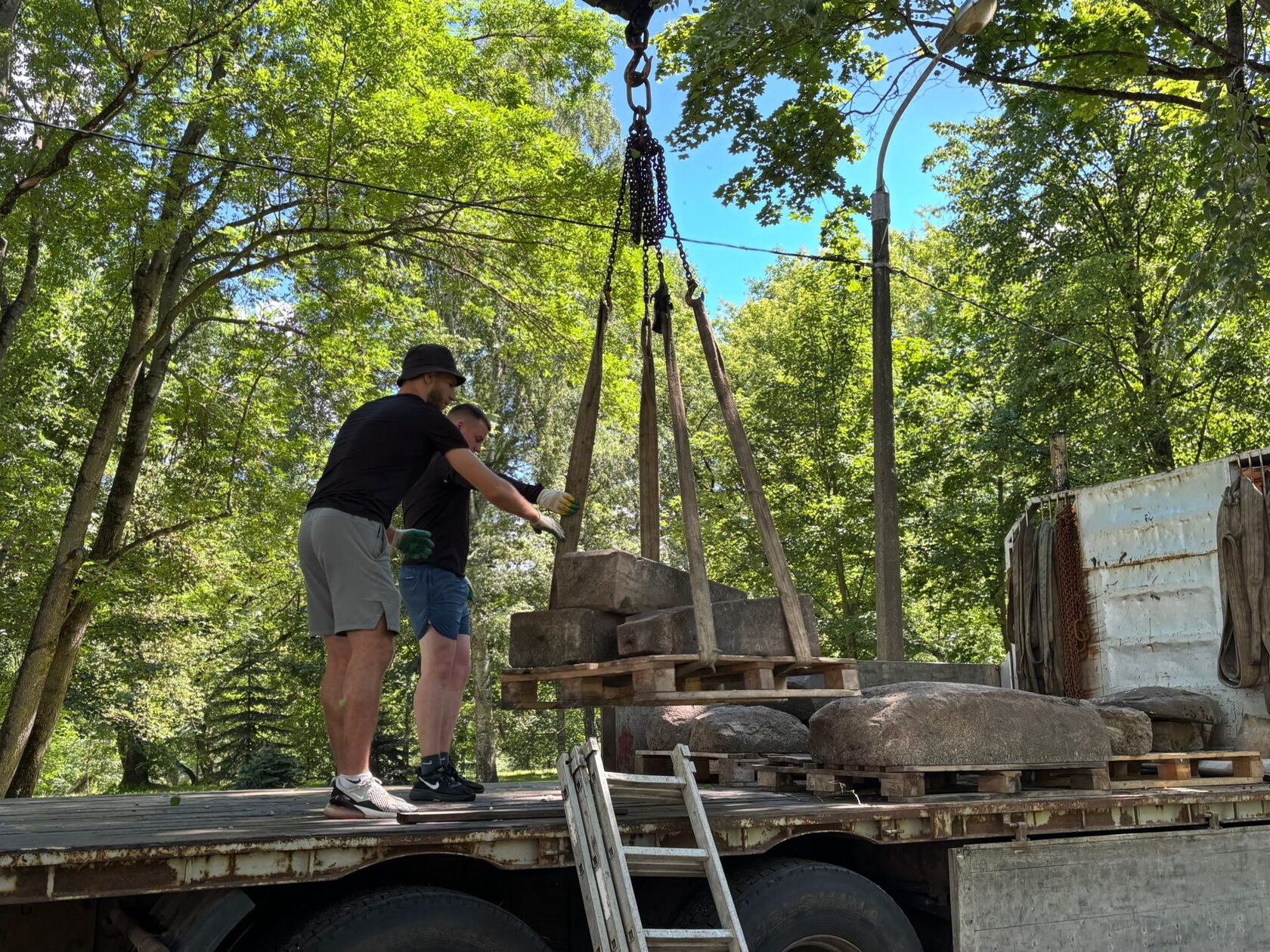
The temporary transfer caused a public outcry. The administration of the Moskovsky District and representatives of the Jewish Religious Union explained: the stones were moved only to carry out a complete cataloguing, cleaning, and recording of names and dates. After the work is completed, the tombstones will return to Sukhaya in the form of a lapidary.
The Position of the Chief Rabbi
The Chief Rabbi of the Jewish Religious Union in the Republic of Belarus, Mordechai Raikhinshtein, supported the project:
"The construction of a lapidary is a blessed deed that will perpetuate the memory of the cemetery that was here and of the people buried there. At the cemetery on Sukhaya Street, the stones were scattered chaotically. There is no connection between where a stone is located and the stone itself, and there is no guarantee that in such a state they will be preserved. Creating a memorial is the only way to worthily preserve the evidence of history."
Project Volunteers
Volunteers joined the work of cleaning and cataloguing the tombstones, including members of the Maccabi BY sports club and simply concerned citizens interested in preserving historical memory.
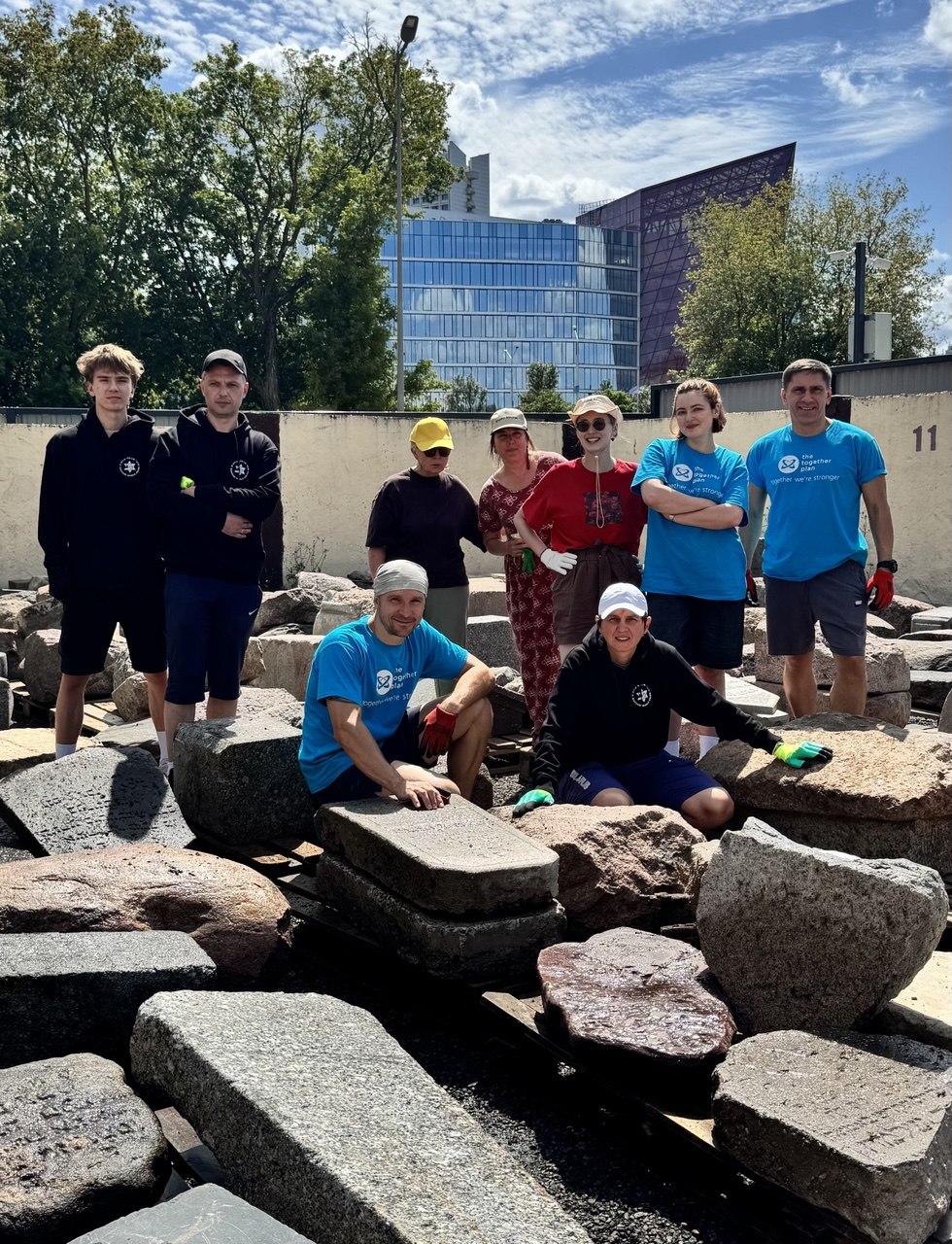
On July 26, the first large-scale volunteer outing took place, during which 70 matzevot were processed. On August 13, the work continued.
As a result of the two outings:
- 140 tombstones were cleaned of many years of grime;
- each stone was measured, photographed, and numbered;
- all elements were recorded for subsequent entry into the catalogue.
What's Next?
In the near future, the Union plans to:
- complete the work of cleaning, measuring, and photographing all surviving matzevot;
- begin translating the inscriptions from Hebrew and Yiddish into Russian and English;
- create a complete catalogue with names, dates, and other information about the buried.
For the autumn of 2026, the start of the design project for the lapidary is planned — a memorial composition at the site of the former cemetery that will unite all the surviving matzevot into a single architectural space.
Why This Matters
The meaning of this project goes deeper than simply preserving ancient tombstones. It is about restoring the connection between the past and the present. About giving people who live in Minsk today the opportunity to see the material traces of Jewish life that existed here for centuries.
The head of the Moskovsky District administration, Sergei Rubanov, emphasized:
"The lapidary on Sukhaya Street will become a significant site not only for the Jewish community, but for all residents of the district — a symbol of respect for history and for the people who lived here before us."
For many years, these stones lay forgotten. Now, they have finally been remembered. And this is only the beginning.
Read more