
01.06.2026
Reviving Maccabi in Belarus: Why We Are Rebuilding This Sporting Movement Today
Sport in Jewish tradition is more than just competition. It builds character, strengthens the spirit, and connects generations. This is exactly why the Jewish Religious Union in the Republic of Belarus has taken the initiative to revive the "Maccabi" movement in Belarus. Our goal is not merely to bring back a name, but to create a modern sporting framework that unites people through sport, health, and a shared purpose.
Why "Maccabi"?
The name is no accident. The Maccabees — the ancient Jewish warriors whose strength and valor became symbols of the struggle for independence and national pride — are the inspiration. The "Maccabi" movement, which emerged in Europe at the end of the 19th century, has always carried these ideals: sporting honor, a healthy lifestyle, and the unity of the Jewish people. In 1921, the World Maccabi Union was established, uniting Jewish sports clubs across the globe. Today, we want Belarus to once again be part of this global family.
A Rich Past — The Foundation for the Future
Belarusian "Maccabi" has a deep history. At the turn of the 20th century, when the Jewish population in the cities of Western Belarus was significant — in Grodno, for instance, it reached 40% — the first sports clubs began to emerge here.
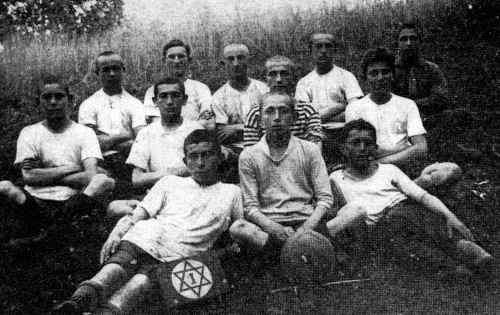
Grodno "Maccabi," founded in 1922, was one of the first and strongest. Its football team competed in the championships of Grodno and the Białystok district, winning bronze and silver medals. In 1932, the club won bronze in the championship, and in 1938 — silver, losing only to the team WKS Grodno.
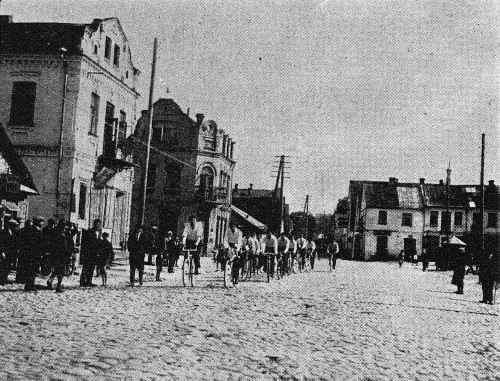
But "Maccabi" was more than just football. Clubs in Grodno, Brest, Pinsk, Slonim, Vitebsk, and Minsk developed gymnastics, athletics, swimming, cycling, and even weightlifting. They built their own grounds and stadiums, drawing crowds of passionate fans.
Tragedy and Revival
The Second World War and the Nazi occupation tragically brought this history to an end. Jewish sports clubs ceased to exist, and many documents and photographs were lost.
Today, however, we are reclaiming this chapter of our shared history. At the initiative of the Jewish Religious Union, a new team — "Maccabi BY" — is being established. We are open to athletes of all nationalities, because we believe that sport unites people, builds character, and helps preserve identity.

Today, as a century ago, the Jewish community of Belarus needs a space for growth, connection, and spiritual strength. "Maccabi" is more than sport — it is a platform for intergenerational encounter, for passing on traditions, and for demonstrating that Jewish life in Belarus is continuing and gaining strength.
The Jewish Religious Union sees this movement as an opportunity to restore the former glory of Jewish sport in our country, to represent Belarus with honor on the international stage, and to give new generations a sense of belonging to a great history.
The story of Belarusian "Maccabi" continues right now. And we invite everyone to be a part of it.
Read more